Something About AI Art Just Feels Off — And We Can't Stop Looking
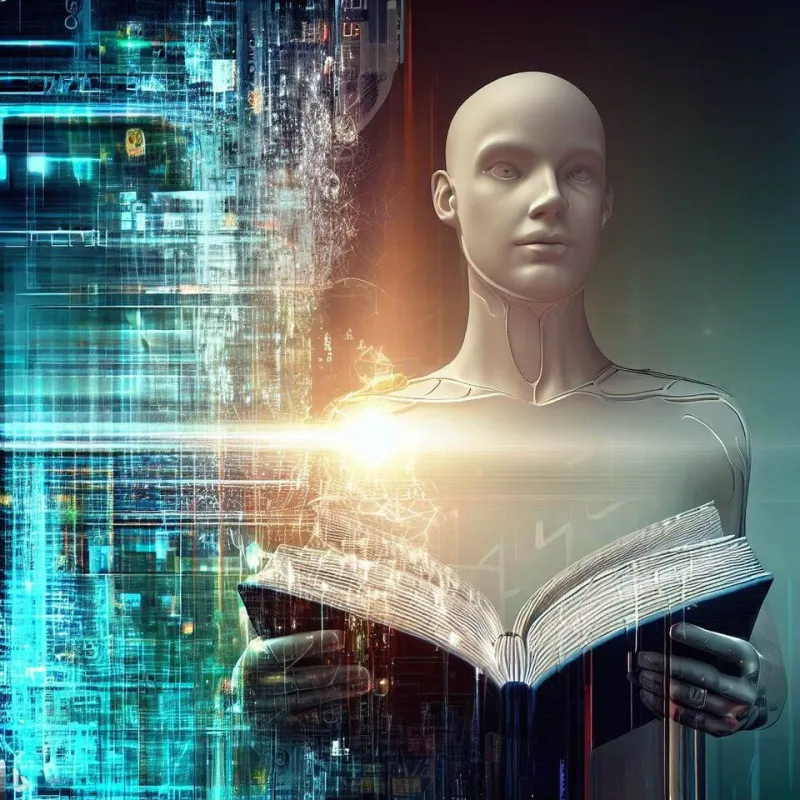
Photo: Microsoft Bing, CC BY-SA 4.0, via Wikimedia Commons
The Glitch in the Beautiful Machine
You've seen it. A portrait that's almost perfect — lighting immaculate, composition balanced, skin rendered in impossible detail — and yet something crawls under your skin when you stare too long. The eyes don't quite track. The hands have that extra finger. The background softens into a dreamlike smear that no real photographer would ever allow. Your brain registers it as wrong before your conscious mind has time to file a formal complaint.
This is the algorithmic uncanny valley, and if you spend any time online in 2024, you're living inside it.
The term "uncanny valley" was coined by roboticist Masahiro Mori back in 1970, originally describing the unsettling dip in human comfort that happens when a robot or animated character gets almost human — close enough to trigger recognition, but not close enough to feel real. The concept mapped neatly onto CGI characters in film, but nobody anticipated it would eventually describe an entire genre of internet content.
AI image generators — Midjourney, DALL-E, Stable Diffusion, and their expanding family of derivatives — have exploded into mainstream culture with a speed that outpaced any reasonable cultural conversation about them. And the reaction has been fractured in a way that's genuinely fascinating to watch.
What Your Brain Is Actually Doing
Neuroscientists who study aesthetic perception have a term for what happens when we process images: predictive coding. Your brain is essentially running a constant background simulation of the world, generating expectations about what it's about to perceive, then flagging anything that violates those predictions. Art, at its best, plays with those predictions deliberately — a painter distorts perspective to create emotional tension, a photographer frames a shot to subvert expectation. The violation is intentional, and your brain reads that intention.
AI images violate predictions too, but not intentionally. The model doesn't know that human hands typically have five fingers. It learned from billions of images that hands exist in certain contexts, that they correlate with certain visual features, but the underlying logic of biological anatomy isn't baked in. When it gets it wrong, there's no authorial intent behind the error — and that absence is what your brain detects.
"It's not really about the technical errors," said one digital artist who's been working with generative tools since 2021 and asked to remain anonymous because, in her words, "the AI discourse is exhausting and I don't want to be the person." "You can fix the hands now. The newer models are way better. But people still feel it. I think what they're sensing is the absence of a decision. Every choice in a real piece of art has a reason, even if the artist can't articulate it. With AI, there's no one home."
That phrase — no one home — keeps surfacing in conversations about this stuff. It gestures toward something philosophical that the technical debates tend to skip over.
Creativity Without a Body, Art Without a Scar
Here's the uncomfortable question that sits at the center of all this: does art require suffering? Not in the tortured-genius cliché sense, but in the more basic sense of having a perspective that costs you something. Every human artist brings their accumulated experience to their work — their fears, their obsessions, the specific quality of light in their childhood bedroom. That baggage isn't incidental. It's the signal.
AI has no childhood bedroom. It has training data.
Philosophers of art have been wrestling with this for decades under the banner of "expression theory" — the idea that authentic art is an externalization of inner experience. By that framework, AI-generated images aren't art at all; they're sophisticated pattern recombination. But that framing might be too tidy. Plenty of human-made art is also sophisticated pattern recombination. Commercial illustration, stock photography, genre fiction — these forms follow conventions, meet expectations, and nobody calls them soulless (usually).
The more honest answer is probably that we don't have a clean philosophical framework for this yet, and the discomfort we feel looking at AI images is partly the friction of that absence.
But We Can't Look Away
Here's the thing nobody wants to admit in the discourse: the unsettling quality is part of the draw.
Midjourney's aesthetic — that hypersaturated, baroque, slightly-too-much quality — has become its own visual language. People seek it out. Entire aesthetics communities on Tumblr and Reddit have formed around curating and appreciating AI-generated imagery specifically because of its strangeness, not despite it. The glitchy backgrounds, the impossible architecture, the faces that look like they were assembled from a dream — these aren't bugs people are tolerating. They're features people are collecting.
There's a lineage here that connects to earlier fringe internet aesthetics — vaporwave's deliberately degraded nostalgia, glitch art's embrace of digital error, liminal space photography's obsession with the uncanny. All of these movements found beauty in wrongness. AI imagery is just the newest iteration of that impulse.
"We've always been drawn to the edge of the recognizable," said one digital art curator who runs a small newsletter about generative aesthetics. "Horror works because it's almost familiar. Surrealism works because it's almost logical. AI art is almost human. That 'almost' is where the interesting stuff lives."
Where This Leaves Us
The cultural moment we're in with AI-generated content isn't really about whether the images are good in any objective sense. It's about what happens to our concept of creativity when the tool becomes indistinguishable from the creator — or at least close enough to create genuine confusion.
That confusion isn't going away. The models are improving. The uncanny valley is narrowing. At some point, the technical tells will mostly disappear, and the philosophical question will be all that's left: not can you tell, but does it matter.
For now, the feeling remains — that low-grade wrongness, that sense of signal without source. And we keep scrolling anyway. Maybe that says something about the images. Maybe it says something about us.