They Feel Closer Than Your Best Friend — And That's Not an Accident
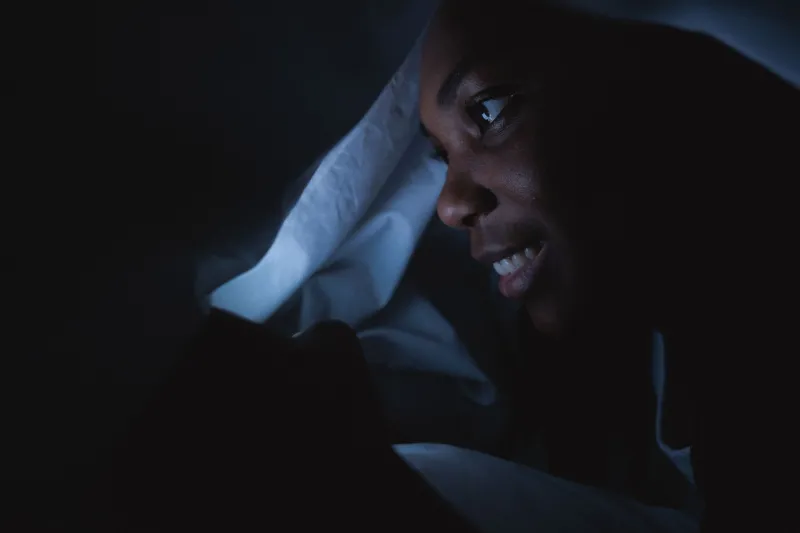
Something weird happens when your favorite creator posts a vlog from their kitchen at 7am, coffee in hand, talking about the fight they almost had with their partner last night. You feel it — that small, warm pull of recognition. Like you're being let in. Like they'd probably like you if they knew you.
Then you hang up the phone with your actual friend — someone you've known for eleven years — and feel almost nothing by comparison.
That's not a personal failing. That's a system working exactly as intended.
The Closeness That Isn't
Parasocial relationships aren't new. The term was coined back in 1956 by sociologists Horton and Wohl, who noticed that television audiences developed one-sided emotional bonds with on-screen personalities. People felt like they knew their favorite TV hosts. They'd talk about them at the dinner table like mutual friends.
But what's happening now is different in kind, not just degree. The intimacy being manufactured in 2024 is surgical. It's specific. And it's delivered through a device you carry in your pocket and check an average of 96 times a day.
Your real friendships have friction — bad timing, awkward silences, the guilt of not texting back, the exhausting labor of being known. Your parasocial ones don't. The creator is always available, always emotionally coherent, always at their most considered and compelling. Even when they're performing vulnerability, it's been edited down to the most affecting version of itself.
You're not comparing a real relationship to another real relationship. You're comparing a real relationship to a highlight reel of intimacy, optimized for emotional resonance.
The Algorithm's Role in All of This
Here's where it gets structural. Platforms don't just passively host these creators — they actively surface the content most likely to generate attachment. Watch time, return visits, comment engagement: these metrics reward the stuff that makes you feel seen. Creators who figure out how to manufacture that feeling get pushed. Creators who don't, fade.
So there's a selection pressure operating in the background, quietly filtering for the personalities best at producing synthetic closeness. The ones who make it to your feed aren't just talented or entertaining. They're specifically good at making you feel like you have a relationship with them.
That's not cynicism — plenty of these creators genuinely care about their audiences. But caring and engineering aren't mutually exclusive. The tools they use (direct address, confessional framing, callbacks to previous videos, the illusion of shared memory) are the same whether they're deployed with affection or strategy.
The Uncanny Valley of Intimacy
There's a concept in robotics called the uncanny valley — the point where a humanoid figure looks almost real, but not quite, and the result is deeply unsettling rather than comforting. Something similar happens in parasocial relationships, but the valley runs in the opposite direction.
With a creator you've followed for years, the intimacy can become so convincing that the absence of reciprocity starts to feel wrong. You know their dog's name, their childhood trauma, their opinion on every mildly controversial topic. You've watched them cry. You've watched them recover. You've watched them change.
And then one day they do something — miss a detail they should know about their own community, or respond to a controversy in a way that feels weirdly corporate, or just act like a stranger in a meet-and-greet — and it lands like a small betrayal. Not because they did anything wrong. But because the intimacy was never real, and for one jarring second, you can see the seam.
That's the uncanny valley. The moment the illusion of closeness becomes so complete that puncturing it produces grief.
Why Your Real Friends Can't Compete
This is the part nobody really wants to say out loud: parasocial relationships are, in a narrow and specific way, easier than real ones. Not better. Easier.
Real friends need things from you. They're inconsistent. They have bad days where they're not their best selves. They forget what you told them. They're distracted. They're going through their own stuff and sometimes that stuff takes up all the available space. The relationship requires maintenance, negotiation, mutual vulnerability, and an ongoing willingness to tolerate imperfection.
A parasocial relationship requires none of that. The creator performs, you receive, you feel connected, you close the app. There's no risk. There's no rejection. There's no version of this where you say the wrong thing and lose them.
Given the choice between emotional labor and emotional comfort, our brains will reach for comfort every time. That's not weakness — it's just how the system operates. The problem is when the comfort starts to substitute for the labor rather than supplement it.
The Rewiring Nobody Agreed To
There's a reasonable argument that spending thousands of hours absorbing parasocial intimacy has quietly recalibrated what we expect from connection. If your baseline for "feeling close to someone" is shaped by creators who have optimized every interaction for maximum emotional resonance, then actual human relationships — with all their mess and mediocrity — are going to feel thin by comparison.
This isn't just speculation. Researchers studying social media use and loneliness have consistently found a counterintuitive pattern: high engagement with online content often correlates with increased feelings of isolation, not decreased. The connection feels real in the moment. But it doesn't fill the structural need.
You can watch a hundred hours of someone's life and still be completely alone.
What the Feeling Is Actually Telling You
None of this means you should feel bad about caring about the creators you follow. The attachment is real, even if the relationship isn't symmetrical. What they make lands. It matters. It gets you through commutes and bad weeks and 3am insomnia spirals.
But the next time you notice that a creator feels more present to you than a real person in your life, it's worth sitting with that for a second. Not to pathologize it. Just to ask what it's pointing at.
Maybe it's pointing at a friendship that's atrophied and needs tending. Maybe it's pointing at a loneliness that parasocial content is papering over rather than addressing. Maybe it's pointing at the fact that being truly known by someone — messily, imperfectly, with full access to your bad days — is something you've been quietly avoiding.
The creators aren't the problem. The design is the problem. And the design is very, very good at what it does.
We're just now starting to notice the shape of what it's done to us.