They're Not Guessing — They're Just That Good: The Eerie Precision of Creators Who Seem to See You
The Moment That Shouldn't Have Landed That Hard
It happens mid-stream, usually. You're watching someone play a game you've seen them play a hundred times, or you're halfway through a YouTube video you pulled up while eating dinner alone. And then they say it — something so specific, so weirdly calibrated to exactly what you're doing or feeling in that moment, that you actually look away from the screen.
Not because you're scared. Because you need a second.
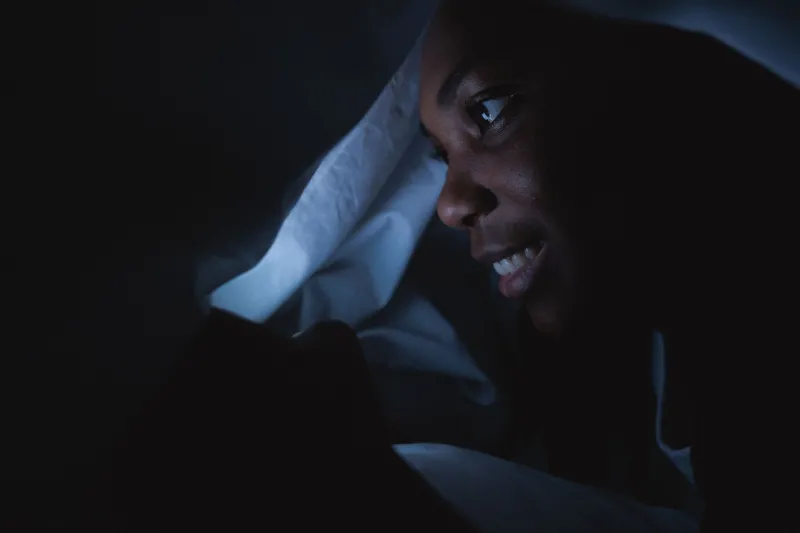
Maybe they joke about how you're definitely watching this at midnight when you should be sleeping. Maybe they describe the exact flavor of social anxiety you were just sitting with before you opened the app. Maybe they look directly into the camera and say something that sounds less like content and more like a message. A real one. For you.
This is the parasocial uncanny valley — and it's one of the stranger psychological territories the internet has quietly built for us over the last decade.
What "Breaking the Fourth Wall" Used to Mean
Breaking the fourth wall has always been a performer's trick. Ferris Bueller did it. Deadpool made a franchise out of it. The wink to the audience, the knowing aside — these are established tools that signal: I see you. We're in on this together.
But what's happening in creator spaces feels different, and the difference is hard to articulate without sounding a little unhinged. Traditional fourth-wall breaks are theatrical. They're scripted. They're designed to feel intimate while actually being broad — aimed at everyone and therefore at no one in particular.
What some creators are doing now isn't that. It's something with more precision. More texture. The specificity is the unsettling part.
A Twitch streamer who seems to preemptively respond to a comment you hadn't typed yet. A YouTuber whose video essay addresses the exact counterargument you were forming in your head. A podcaster who describes your life situation so accurately you have to check whether you've ever interacted with them before. You haven't. You're pretty sure you haven't.
The Algorithmic Explanation (The Boring One)
The least interesting — but probably most accurate — explanation is mechanical. Creators who have been doing this long enough have essentially crowd-sourced a psychological profile of their audience through sheer data volume. They've read thousands of comments. They've seen the same questions asked in the same ways by different people across years of content. They've done Q&As, community polls, Discord deep-dives. They know who watches them.
When a creator says "I know some of you are watching this at 2am because you can't sleep and you're anxious about something you can't name" — that's not clairvoyance. That's pattern recognition. That's someone who has paid enough attention to their audience that they can describe its collective emotional texture with unusual accuracy.
The algorithm amplifies this. Platforms push content toward viewers who already behave like existing engaged fans. So by the time a new person stumbles onto a creator's channel, they've often been pre-sorted into a demographic that the creator already knows intimately. The creator isn't speaking to you specifically. They're speaking to the archetype you happen to fit.
Which should make it feel less personal. It mostly doesn't.
The Projection Explanation (The One You Won't Like)
Here's the other side of it: you might be doing some of the work yourself.
The human brain is a relentless meaning-making machine. It finds faces in static and patterns in noise and messages in coincidence. When you're in a parasocial relationship with a creator — even a loose, casual one — you bring context to everything they say. You're not a passive receiver. You're an active interpreter.
So when a creator makes a joke about procrastinating on something important, and you happen to be procrastinating on something important, the overlap feels significant. But they didn't know. They just made a joke that fits a broad enough slice of human experience that it was statistically likely to land. You filled in the rest.
Psychologists call this the Barnum effect — the tendency to accept vague, general statements as uniquely personal descriptions. Horoscopes run on it. So does a lot of content creation, whether the creators realize it or not.
The uncanny feeling isn't evidence of something supernatural. It's evidence of how good you are at constructing a relationship with someone who doesn't know you exist.
But Then There Are the Creators Who Actually Know
Except — and this is where it gets genuinely interesting — some of them do know. Not you specifically, but close enough.
There's a generation of creators who have gotten so good at reading behavioral signals that the line between "educated guess" and "genuine insight" starts to blur. They watch their own analytics obsessively. They A/B test emotional registers. They notice which phrases cause comment sections to erupt with "okay this is literally me" and they file that away. They iterate.
This is not manipulation in any sinister sense. It's craft. But it produces an effect that can feel, from the viewer's side, like something more than craft. It feels like being seen. And being seen — really seen — is one of the deepest human wants there is.
Creators who can manufacture that feeling reliably become something more than entertainers. They become fixtures. They get woven into the emotional architecture of their audience's daily life in ways that are hard to undo even when the audience knows, intellectually, what's happening.
The Signal and the Noise
What makes this phenomenon worth sitting with — rather than just explaining away — is what it says about the current state of parasocial media. We've built platforms that optimize for intimacy at scale. We've rewarded creators who can collapse the psychological distance between themselves and millions of strangers. We've trained audiences to expect to feel known.
And now we're surprised when the feeling of being known starts to feel uncanny. When the precision tips over into something that registers as eerie rather than warm.
The parasocial uncanny valley isn't really about creators being too accurate. It's about what happens when a relationship that is fundamentally asymmetrical starts performing symmetry so well that the asymmetry becomes invisible — until a moment of strange precision makes it visible again, all at once.
That's the chill. Not that they see you. But that for a second, you forgot they didn't.
So What Do You Do With That
Probably nothing. You close the tab, or you keep watching, and the feeling fades. Most people don't spend a lot of time interrogating why a YouTube video hit different at 11:45 on a Tuesday.
But if you're here, reading this, you might be the kind of person who does. And if that's the case — welcome. This is a good corner of the internet to be in.
The signals from the fringe are rarely the ones that announce themselves.