Reading the Room at 60 Frames Per Second: The Fans Diagnosing Creators Before Creators Diagnose Themselves
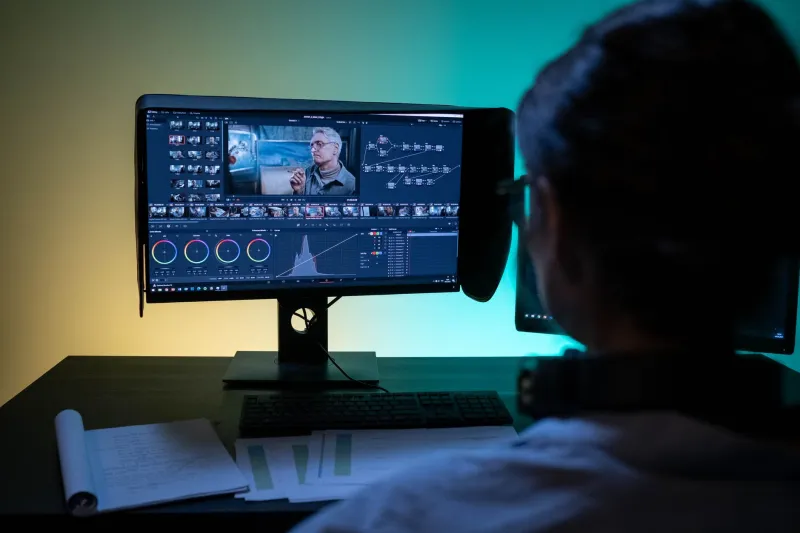
There's a specific kind of fan who doesn't just watch a video. They study it. They'll scrub back fifteen seconds because something in the creator's jaw looked slightly tighter than usual. They'll pull up a side-by-side comparison of last Tuesday's stream versus one from eight months ago and annotate the differences in a shared Google Doc. They'll timestamp the exact moment a laugh didn't quite reach someone's eyes.
And sometimes — maybe more often than feels comfortable — they're right.
The New Amateur Psychoanalysts
Call it parasocial forensics. Call it hypervigilant fandom. Whatever the label, a quiet but deeply organized subset of online fan communities has developed something that looks a lot like amateur psychological profiling. The tools are accessible to anyone with a decent internet connection: slow-motion playback, video comparison software, Discord servers dedicated to behavioral tracking, and years of accumulated footage that functions as a kind of emotional baseline database.
The behavior isn't new exactly — fans have always read into things — but the infrastructure around it has gotten genuinely sophisticated. There are community wikis cataloging a creator's known stress responses. There are pinned posts explaining how to distinguish a "tired" tone from a "dissociated" one based on speech cadence. Some communities have developed what they call "wellness check" threads, where members collectively analyze recent content and vote on whether someone seems "off."
One fan who goes by the handle @threadbare_signal on a major Discord server dedicated to a mid-tier YouTube personality described it this way: "We've watched hundreds of hours of this person. We know what they look like when they're genuinely happy versus performing happy. It's not that deep — it's just pattern recognition at this point."
Except it kind of is that deep.
When the Read Is Accurate
The part that makes this hard to dismiss is that these communities occasionally get it right in ways that are difficult to explain away as coincidence.
In documented cases across Reddit and fan Discord spaces — particularly around gaming streamers and beauty creators — fan communities flagged behavioral changes weeks or even months before a creator publicly announced a mental health crisis, a breakup, or a serious health diagnosis. The signs they identified ranged from subtle things (a creator who used to maintain direct eye contact with their camera suddenly looking slightly off-axis) to more overt behavioral shifts (shorter videos, longer gaps between uploads, a flattening of vocal expressiveness).
One Reddit thread from a fanbase centered around a lifestyle creator went viral within its community after members noted a gradual change in her speech patterns — specifically, a reduction in future-tense language and a shift toward more present-focused, clipped sentences. About six weeks later, she announced she'd been dealing with a depressive episode. Multiple members of that thread cited the behavioral analysis as the tell.
Creators themselves have occasionally acknowledged this phenomenon, usually with a mix of gratitude and unease. A few have mentioned in their own content that fans reached out with concern before they'd fully admitted to themselves that something was wrong.
The Ethical Blur Nobody Wants to Talk About
Here's where it gets genuinely murky.
There's a version of this that reads as community care — people who've built real emotional investment in someone watching out for signs of distress and, in some cases, reaching out with genuine support. Mental health awareness in online spaces has grown significantly, and there's an argument that a community that's attuned to a creator's wellbeing can function as a loose safety net.
But there's another version that's harder to sit with. The same skills that let a fan notice someone seems depressed also let them build a detailed psychological profile of that person without their knowledge or consent. The same community infrastructure that organizes wellness checks also organizes obsessive behavioral surveillance. The line between "I noticed something seemed wrong" and "I have cataloged every micro-expression you've made for two years" is not as clear as either side would like it to be.
Psychologists who study parasocial relationships have pointed out that this kind of hypervigilant attention is often less about the creator's wellbeing and more about the fan's need for connection and control within a relationship that is, by definition, one-directional. Knowing something about someone before they know it themselves creates a sense of intimacy — even power — that doesn't actually exist in any reciprocal way.
The creator doesn't know you spotted it. They didn't share it with you. You extracted it.
The Footage as Evidence
What makes this phenomenon distinctly modern is the archive. Creators who've been posting content for years have essentially handed their most devoted fans a longitudinal record of their emotional life — one they probably didn't intend to be read that way.
Every video is data. Every stream is footage. And unlike a conversation or even a social media post, video captures the involuntary stuff: the micro-expressions that flash across a face in under a quarter of a second, the way someone's voice drops at the end of a sentence when they're holding something back, the slight delay before a smile that suggests it's being constructed rather than felt.
Paul Ekman's work on micro-expressions — originally developed for law enforcement and clinical use — has been loosely popularized online for years, and some fan communities have incorporated versions of it into their informal analysis practices. Whether or not the average Discord user is applying it correctly is another question, but the conceptual framework has filtered into the culture: your face tells the truth even when your words don't.
Applied to someone who posts content for a living, that idea becomes a lot more invasive than it sounds in a textbook.
Caring Isn't the Same as Knowing
There's something genuinely touching about a community of strangers who care enough about a person to notice when something seems wrong. That impulse — to pay attention, to show up, to reach out — isn't nothing.
But caring about someone and having accurate insight into their inner life are different things. The fan who correctly predicted a creator's breakdown based on behavioral analysis didn't know that person. They knew their content. They knew the performance. They knew the version of that person that exists on the other side of a camera and a ring light and an edit.
The gap between those two things is where this whole phenomenon lives — in the space between genuine concern and the particular kind of closeness that only exists in one person's head.
Some fans seem aware of the line. Others have built communities entirely on the premise that the line doesn't exist.
The creator, meanwhile, keeps posting. Unaware that somewhere, someone is building a behavioral baseline. Watching for the tells. Waiting to be right.