Ghost Servers: The Night Shift Keeping Dead Game Worlds On Life Support
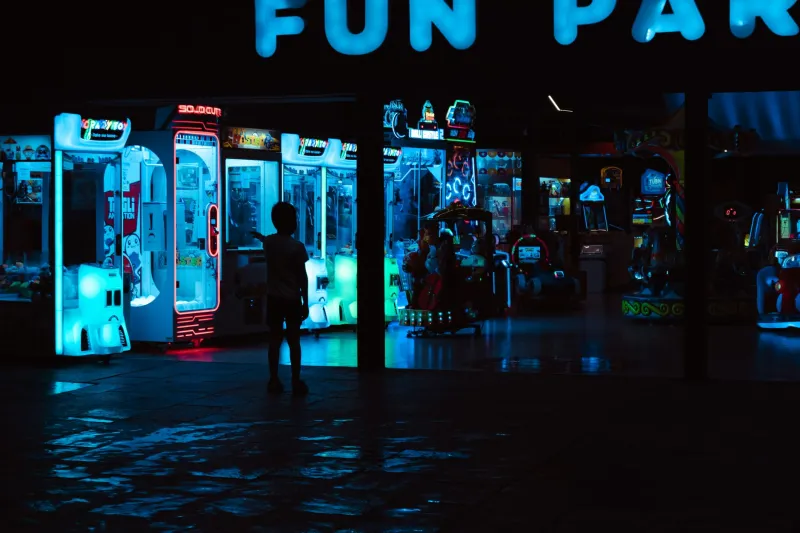
There's a particular sound a game makes when it's empty. Not silence — games are never silent. The ambient loop still plays. Footsteps still echo off textures nobody's touching. In Firefall's abandoned zones, wind still whistles over terrain that hasn't had a visitor since 2016. In the husk of City of Heroes before its fan resurrection, the Atlas Park fountain burbled for years to absolutely no one.
These are the ghost lobbies. And they're more common than the industry likes to admit.
The Last Person in the Room
Every dying game has a moment when the population chart crosses some invisible threshold and it stops being a community and becomes a vigil. The people still logging in at that point aren't playing, exactly. They're keeping watch.
Talk to the holdouts — the folks who run a nightly patrol through a world where they haven't seen another human in months — and a pattern emerges. They don't describe themselves as players. They describe themselves as caretakers. One longtime moderator of a defunct MMO told me she logs in "like checking on a neighbor's plants." She's never met another active player in the same timezone. She still reports bugs. The developers stopped reading the forums in 2021.
This is the part outsiders never get: the game isn't the code. The game is the fact that someone might show up. The holdouts are the reason that's still technically true.
Why Companies Keep the Lights On
The obvious assumption is that dead servers are an oversight — some forgotten line item, a VM nobody decommissioned. Sometimes that's true. But more often, the economics are stranger and more deliberate.
Shutting down a game costs money and generates headlines. Legacy server infrastructure, at scale, is remarkably cheap — a few thousand dollars a year for a title that once made tens of millions. Against that, publishers weigh the PR damage of a shutdown announcement, the legal exposure around purchased virtual goods, and, increasingly, the archival value. A game's backend is also its corporate memory: player behavior data, anti-cheat telemetry, the engine itself. Some of these worlds stay alive because they're cheaper as monuments than as landfill.
And some stay alive for a reason companies won't say out loud: the last players know things the dashboards don't. A game with twelve daily logins isn't dead the way a spreadsheet says it's dead. Those twelve people are the seed crystal. When City of Heroes came back from the grave in 2019, it wasn't because of market analysis. It was because the vigil never dispersed.
The Economy of Almost-Nothing
Spend enough time in these spaces and you start to notice their own strange culture — a micro-civilization running on fumes.
There are unofficial census projects, fans tracking login counts like ornithologists counting a species headed for extinction. There are the farewell tours: players who return years later just to stand in one specific spot. There's the etiquette — you don't ask "is anyone still here?" in general chat. You just exist visibly for a while, the way you'd nod to the only other car in a parking lot at 2 a.m.
The holdouts will tell you the experience changed them. One put it like this: "You find out what the game actually was once everyone who was playing it to win is gone. What's left is just the place."
What the Rest of Us Are Missing
We tend to frame dead games as failures — shuttered arcades, sunk costs, cautionary tales. But the ghost lobbies suggest something else. They're proof that online spaces can matter past their profitability, that a digital place can hold meaning the way a closed-down diner still holds meaning for the people who ate there.
The companies keeping servers humming, whether by sentiment or spreadsheet, are accidentally running the largest preservation experiment in entertainment history. And the last players logging in each night? They know something the rest of the internet has forgotten: a world doesn't have to be crowded to be worth keeping.
It just has to be someone's.