Dead Air, Dead Format, Dead Honest: In Defense of the Commentary Track Nobody Remasters

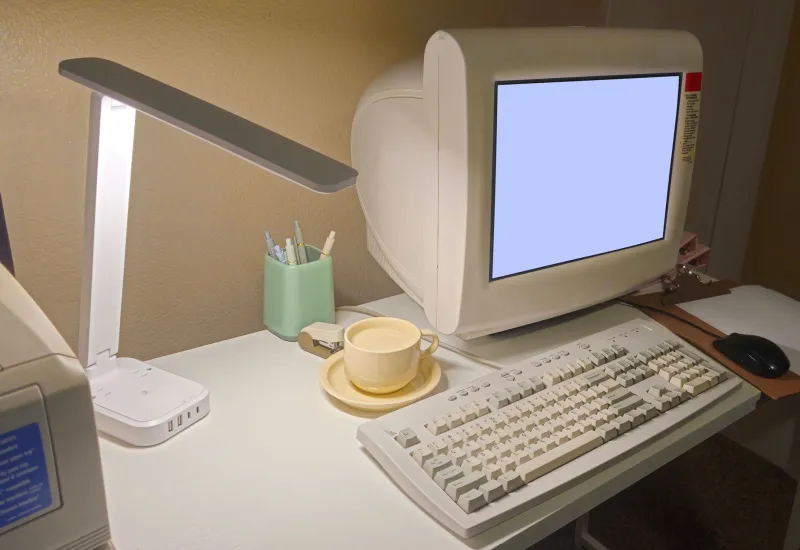
Photo: Colin, CC BY-SA 4.0, via Wikimedia Commons
Somewhere in a streaming catalog right now, a movie is sitting there looking extremely clean. Correct color grade, correct aspect ratio, correct audio mix, correct metadata. Click play, watch movie, roll credits, get served the next thing. It is a perfectly optimized asset.
And it has no second soundtrack. No commentary. No director mumbling about how the weather ruined a shot. No grip wandering into the room to say something the mic barely catches. No four seconds of absolute silence where a man realizes he has forgotten the name of his own cinematographer.
I want to be clear that I'm not arguing for physical media as a moral position. I'm arguing for something narrower and, I think, harder to dismiss: the commentary track is one of the most human things entertainment has ever produced, and we are quietly letting it rot.
The Accidental Predecessor
Long before every celebrity had a podcast, commentary tracks were the only place you could hear famous people talking informally for ninety minutes with no script and no edit. It was unstructured. It was unedited. It frequently went nowhere.
That's the whole thing. It went nowhere. A director would spend eight minutes describing a catering problem. A producer would contradict the director about the budget. Two people would talk over each other and then laugh. The track was not built to be clipped, quoted, or optimized, which meant it captured a texture of a person that no press junket ever would.
Compare that to the modern creator interview, which is a product with a hook in the first eleven seconds. The commentary track had no hook. It had a middle. Ninety straight minutes of middle.
What the Messiness Was Actually For
The standard knock on commentary is that most of them are boring. This is true. This is also the point and I will not be moved.
Boredom in a commentary track is load-bearing. When a director runs out of prepared remarks and starts just watching their own movie, you get the good stuff — the mid-sentence course corrections, the sudden admissions, the "we shot this three times and this was the worst one." That's a person being a person in public at feature length.
Crew interruptions are even better. The audio is going along fine and then a door opens and somebody off-mic says they need the hard drive back. Nobody edits it out, because in 2003 nobody was thinking about the archival value of ambient chaos on a secondary audio channel.
The Clean Asset Problem
Streaming platforms have a structural reason to be indifferent here. A movie in their catalog is a file they license and serve. Bonus features are extra bits that don't improve the value of the license in any measurable way, so they drift off. Sometimes they show up on a different platform. Sometimes they show up on a disc that's out of print. Sometimes they don't show up at all.
This is not a conspiracy. It's just the natural outcome of treating films as inventory. Inventory doesn't need a commentary track. Inventory needs a thumbnail.
But here's what falls through the gap: commentary tracks were often recorded once, at a specific moment in time, by people who were about to move on to other projects. Some of those people are dead now. Some of them said things on that track that they never said anywhere else — about the production, about the industry, about a collaborator, about a fear they had. There is no alternate copy of that.
The Audio That Doesn't Fit Anywhere
We have archives for the finished work. We have an entire culture of preservation around the film itself. What we don't have is much of a system for the second soundtrack — the one where the movie plays underneath a conversation about making the movie.
That conversation was, functionally, an early podcast. And if podcasts taught us anything, it's that the unedited version is usually the one worth keeping.
So next time a disc menu offers you a list of audio options and one of them is a bunch of people talking over the thing you just watched, take it. Not because it's good. Because it's evidence.